If you’re anything like me, your “Explore” page is probably 40% people dipping marbled beef into a bubbling pool of red-hot oil.
Hot pot is literally the ultimate communal dining experience.
It’s cozy, it’s chaotic, and it’s the best way to spend three hours eating without actually realizing you’ve been eating the whole time.
But let’s talk about the bill.
Last time I went out for hot pot with a couple of friends, the total came out to something like $150 after tax and tip.
As someone who is currently trying to justify buying a new rug for my rental while also paying for overpriced oat milk lattes, that’s just not a sustainable lifestyle.
So, I decided to figure out how to do it at home.
And honestly? Once you nail the soup base, the rest is just grocery shopping.
You don’t need a fancy table with a built-in burner.
A $25 portable induction cooktop and a pot from the back of your cabinet are all you need to turn your tiny living room into the best restaurant in town.
Here is how you make a hot pot soup base that tastes like you actually know what you’re doing.
The Secret is in the “Base”
The biggest mistake people make is thinking the soup is just… flavored water.
It’s not. It’s the soul of the meal.
In a restaurant, they’ve been simmering those broths for hours.
At home, we’re going to use a few “cheat codes” to get that deep, complex flavor in about 30 minutes.
We’re going to focus on the Spicy Szechuan (Mala) Base because, let’s be real, that’s what everyone wants.
But I’ll also give you the lowdown on a Mild Umami Mushroom Base for those friends who think black pepper is “too spicy.”
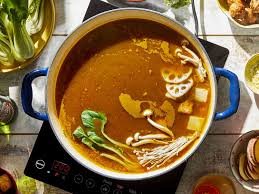
Hot pot Soup Base Recipe
Course: Main EventCuisine: ChineseDifficulty: Easy4-6
servings15
minutes20
minutes~250
kcalDo not skip the sauce station. My go-to is: sesame paste, crushed garlic, chopped cilantro, scallions, a splash of soy sauce, and a lot of chili oil.
Ingredients
The Oil: ½ cup neutral oil (like vegetable or grapeseed) or beef tallow.
The Pastes: 3 tablespoons Doubanjiang (Spicy Bean Paste) + 1 square of store-bought hot pot base (optional, for extra depth).
Aromatics: 2-inch knob of ginger (sliced), 6 cloves of garlic (smashed), 2 stalks of leek or scallion (whites only).
The Spices: ½ cup dried red chilies (cut in half to release seeds for more heat), 2 tablespoons Szechuan peppercorns, 2 star anise, 1 cinnamon stick.
The Liquid: 8 cups of chicken or beef bone broth (see my other recipe for the good stuff!).
The Finish: 1 tablespoon rock sugar (or brown sugar) and a splash of Shaoxing wine (optional).
Directions
- Bloom the Aromatics: In a large pot, heat your oil over medium-low. Toss in the ginger, garlic, and leeks. Sauté until they smell incredible and start to turn golden.
- The Spice Drop: Add the dried chilies, Szechuan peppercorns, star anise, and cinnamon. Keep the heat low! You want to toast them, not burn them. If they turn black, it’ll taste bitter.
- The Paste: Stir in the Doubanjiang and the hot pot base square (if using). Stir it constantly for about 2 minutes until the oil turns a deep, vibrant red.
- The Liquid Gold: Carefully pour in your broth. Turn the heat up to medium-high and bring it to a boil.
- Simmer & Season: Add your sugar and Shaoxing wine. Let it simmer for about 15-20 minutes so all those spices can get to know each other.
- The Transfer: Carefully pour the base into your hot pot (the one on the burner).
- Party Time: Once it’s bubbling at the table, start dropping in your meats, veggies, and noodles!
Recipe Video
Why You Should DIY Your Broth
You can buy the pre-packaged cubes of hot pot base at the Asian grocery store, and honestly, they’re pretty good.
But they can be incredibly salty and oily.
When you make your own (or even just doctor up a store-bought one), you control the vibe.
You can make it extra garlicky, less oily, or “burn-your-tongue-off” spicy depending on your mood.
Plus, making it from scratch makes you look like an absolute legend to your friends.
“Oh, this? Yeah, I just whipped up a Szechuan peppercorn infusion.”
Instant street cred.
The Gear (Small Space Friendly)
You don’t need a massive kitchen for this.
I live in a space where “countertop” is more of a suggestion than a reality, and I make this work all the time.
If you have a portable burner or even an electric fondue pot, you’re golden.
If you don’t have a divided pot (the “Yin-Yang” ones), just pick one flavor and commit.
Or, if you’re feeling fancy, use two separate small pots on two separate burners.
We’re all about the “work with what you got” energy here.
The Anatomy of the Perfect Spicy Base
There are three main components to a killer spicy base:
- The Aromatics: Ginger, garlic, and leeks. These provide the “perfume.”
- The Heat: Dried red chilies (and lots of them).
- The Numb: Szechuan peppercorns. This is what gives you that “Mala” feeling—the tingly, numbing sensation that makes hot pot so addictive.
By frying these in oil (or beef tallow if you want to be authentic) before adding your liquid, you “bloom” the spices.
It’s the difference between a soup that tastes like spicy water and a soup that has layers.
Pro-Tips for the Full Experience
- The Dipping Sauce: Do not skip the sauce station. My go-to is: sesame paste, crushed garlic, chopped cilantro, scallions, a splash of soy sauce, and a lot of chili oil.
- Order of Operations: Cook your meat first to flavor the broth even more, then the veggies, and save the noodles for the very end when the broth is at its peak flavor.
- The “Scum” Factor: As you cook meat, you’ll see some gray foam rise to the top. Just scoop it out with a spoon and keep going. It’s totally normal.
Final Human Thoughts
There is something so grounding about sitting around a bubbling pot with people you actually like.
It’s messy, it’s loud, and you’ll probably end up with a tiny splash of red oil on your shirt (don’t wear white, trust me).
But in a world where we spend so much time looking at screens, a three-hour meal where you’re actually doing something together is the ultimate vibe shift.
It makes your apartment feel like a home.
And honestly? It tastes way better when you know you didn’t have to pay a $40 “service fee” to enjoy it.
Stay spicy!