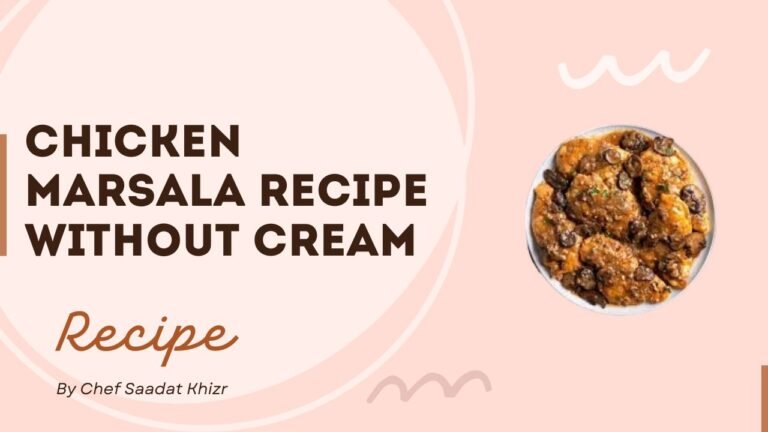
I’m just going to be completely real with you for a second: Chicken Marsala has a bit of an identity crisis in the year 2026.
I’m 22, and for the longest time, I thought “fancy” Italian-American food was synonymous with heavy cream. I grew up in an era where if a pasta dish or a chicken entrée wasn’t drenched in a sauce thick enough to hide the actual ingredients, it felt “incomplete.” I assumed that if a sauce wasn’t a creamy beige color and thick enough to coat a spoon like house paint, it was “missing something.” I thought cream was the shortcut to luxury.
But then I started looking into the actual mechanics of a classic pan sauce—the kind they serve at those restaurants where you need a reservation three weeks in advance—and I realized something revolutionary: Heavy cream is often just a crutch.
We use it to hide a sauce that hasn’t been reduced properly or to mask a lack of depth in the flavor profile. In factand I say this as a helpful peer, not a critic the most authentic, high-end versions of Chicken Marsala don’t use a drop of cream. They rely on science, technique, and a little bit of “kitchen magic” to create a sauce that is silkier, richer, and far more sophisticated than anything you’d get out of a heavy cream carton.
This is the “main character” version of Chicken Marsala. It’s savory, earthy, and has that incredible “zing” from the Marsala wine that cream usually just mutes. If you want to host a dinner party and have everyone think you secretly attended culinary school over the weekend, this is your blueprint.
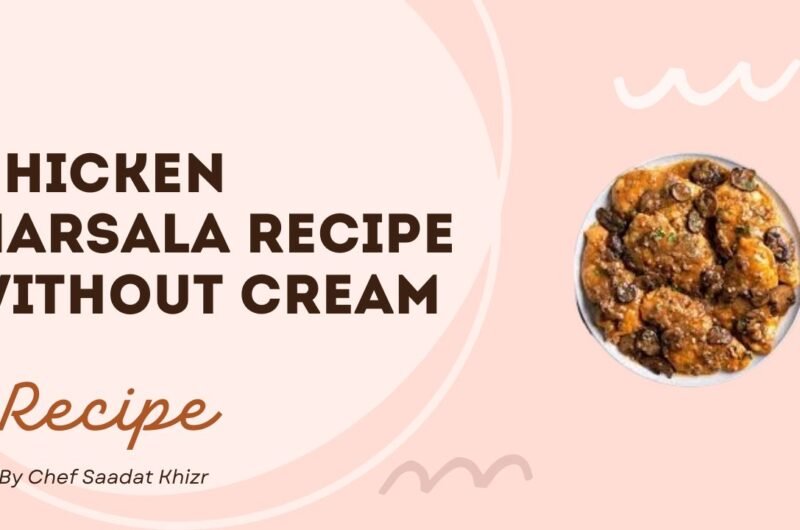
The “High-End Bistro” Chicken Marsala: Why Cream is Actually Holding You Back
Course: Main DishCuisine: Italian-AmericanDifficulty: Medium4
servings20
minutes25
minutes380
kcalYou can serve it over a pile of buttery angel hair pasta, alongside some crispy roasted potatoes, or even over a bed of sautéed spinach if you’re trying to keep it light.
Ingredients
1.5 lbs chicken cutlets (pounded thin, about 1/4 inch—this is crucial for even cooking)
1/2 cup all-purpose flour
1 teaspoon sea salt
1/2 teaspoon freshly cracked black pepper
1/2 teaspoon garlic powder
2 tablespoons extra virgin olive oil
4 tablespoons unsalted butter (Note: Divide this into 2 portions of 2 tablespoons each)
10 oz Cremini (Baby Bella) mushrooms, sliced thick
1 large shallot, finely diced (shallots are more sophisticated than onions here)
3 cloves garlic, minced
3/4 cup Dry Marsala wine
3/4 cup chicken stock (use low-sodium so you can control the salt)
1 teaspoon fresh thyme leaves (or 1/2 tsp dried)
1 tablespoon fresh Italian parsley, chopped (for the “chef-y” finish)
Directions
- If your chicken breasts look like they’ve been going to the gym (too thick), you need to pound them out. Place them between two sheets of plastic wrap and use a meat mallet or a heavy skillet to whack them until they are an even 1/4-inch thickness. This isn’t just about aggression; it ensures the chicken cooks in 6 minutes instead of 15, so it stays juicy.
- In a shallow bowl, whisk together the flour, salt, pepper, and garlic powder. Dredge each chicken cutlet in the flour, shaking off the excess until only a very fine dust remains.
- Heat the olive oil and the first 2 tablespoons of butter in a large stainless steel or cast-iron skillet over medium-high heat. Once the butter stops foaming and starts to smell slightly nutty, add the chicken. Do not crowd the pan! Work in batches if necessary. Sear for 3 minutes per side until golden brown, then remove to a plate and cover loosely with foil.
- In the same pan (keep all those brown bits!), toss in the mushrooms. Do not stir them immediately. Let them sit for 2-3 minutes to develop a deep, dark sear. This is where the umami comes from. Once browned, add the diced shallots and sauté for another 2 minutes. Add the garlic and thyme for the last 30 seconds.
- Pour in the Marsala wine. Use a wooden spoon to scrape the bottom of the pan like you’re trying to find buried treasure. All that “fond” will dissolve into the wine. Let the wine simmer and reduce by about half. It will start to look like a dark syrup.
- Add the chicken stock. Bring the mixture to a simmer and let it cook for about 5-7 minutes. You want the sauce to reduce until it can “nappe” or coat the back of a spoon.
- Turn the heat down to low. Add the remaining 2 tablespoons of cold butter. Whisk it in quickly and constantly. As the butter melts into the reduction, the sauce will turn from a thin translucent liquid into an opaque, glossy, luxurious glaze.
- Add the chicken and any accumulated juices back into the pan. Spoon the sauce over the chicken and let it simmer for just 1 minute to heat through. Garnish with fresh parsley.
Recipe Video
The Science of the “Silk” (No Cream Required)
If we aren’t using cream, how do we get that luxurious, lip-smacking texture? It isn’t magic; it’s chemistry. The goal is to create a stable emulsion.
We achieve this through two main techniques: Flour dredging and Butter emulsification.
When you coat the chicken in flour before searing, you aren’t just giving it a crust; you’re creating a roux right in the pan. As the chicken sears, some of that toasted flour remains in the oil. When you add your wine and stock, that flour binds with the fat and liquid to create an immediate thickening effect.
The final “glow-up” happens at the very end with a technique called monter au beurre. By whisking cold butter into a hot, reduced sauce, you create a microscopic suspension of fat in water. In technical terms, we are creating a colloid where the butterfat is dispersed through the Marsala reduction. If you were to look at this under a microscope, you’d see the fat globules prevented from merging by the proteins and starches already in the sauce.
The Peer Review: Use cold butter. This is non-negotiable. If the butter is warm, it just melts into oil and you get a greasy mess. Cold butter melts slowly enough that the milk solids can act as an emulsifier, binding the wine and stock into a glossy, velvety glaze.
The Maillard Reaction and “Fond”
To make this sauce hit the back of your throat with that savory “umami” punch, we need to maximize the Maillard Reaction. This is the chemical reaction between amino acids and reducing sugars that gives browned food its distinctive flavor.
As you sear the chicken and the mushrooms, they leave behind little brown bits stuck to the bottom of the pan. In the culinary world, this is called the fond.
$$ text{Fond} = text{The flavor foundation of your entire life.} $$
When you pour the Marsala wine into the hot pan (a process called deglazing), you are literally dissolving those caramelized proteins back into the liquid. That is where the deep, mahogany color comes from. Without the fond, your sauce is just wine-flavored water.
The Wine Rule: Don’t Sabotage Yourself
I’m going to be very direct here: Do not buy “cooking wine” from the grocery store.
If it’s sold in the same aisle as the vinegar and has a label that says “Marsala Cooking Wine,” leave it on the shelf. Those products are loaded with salt and preservatives so they can be sold to minors, and they will make your sauce taste like a chemical experiment.
Go to the actual wine aisle. Look for a bottle of Dry Marsala. It usually costs between $10 and $15, and because it’s a fortified wine, it stays good in your pantry for months.
- Dry Marsala: Use this for savory dishes like chicken or veal.
- Sweet Marsala: Use this for desserts like Tiramisu or zabaglione.
If you use sweet Marsala for this chicken, it will taste like candy. We are going for “bistro chic,” not “birthday cake.”
Final Thoughts
Because this version is cream-free, it’s much more versatile. You can serve it over a pile of buttery angel hair pasta, alongside some crispy roasted potatoes, or even over a bed of sautéed spinach if you’re trying to keep it light.
Economically, this is a win. A whole head of mushrooms, a couple of chicken breasts, and a splash of wine costs significantly less than a steak dinner, but it feels just as celebratory. It’s the ultimate “I’m an adult who knows how to cook” meal.
The sauce is the star here don’t let a drop of it go to waste. If you have extra bread, use it to swipe the plate clean. You’ve earned it.