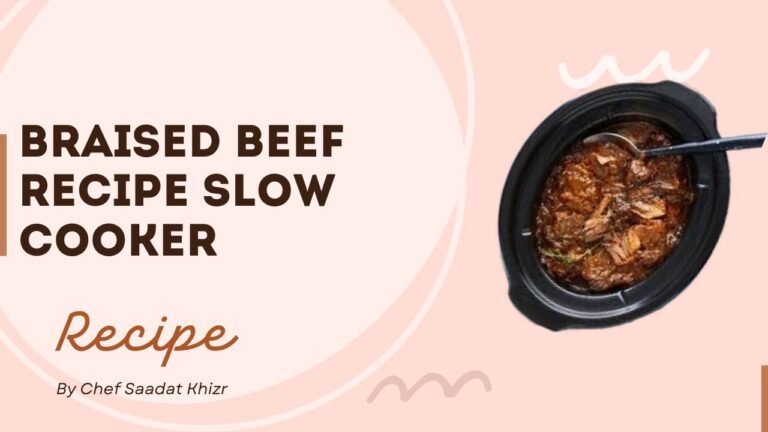
I’m going to be completely real with you: there is no greater feeling than walking into your apartment at 6:00 PM and being hit with the smell of a dinner that has been cooking itself for eight hours.
I’m 22, and while my lifestyle usually involves a lot of “organized chaos,” nothing makes me feel like I have my life together more than a slow cooker masterpiece. It’s the ultimate “main character” energy. You go about your day working, gyming, or just rotting on the couch and meanwhile, in the corner of your kitchen, magic is happening.
But here is the “helpful peer” reality check: “Dump-and-go” is a marketing lie.
If you just toss a cold slab of raw beef and a bottle of broth into a slow cooker and hit “start,” you are not braising. You are boiling. You’ll end up with grey, sad meat and a watery sauce. If you want that deep, mahogany, fall-apart-with-a-spoon texture that looks like it cost $38 at a bistro, you have to follow the rules of the braise.
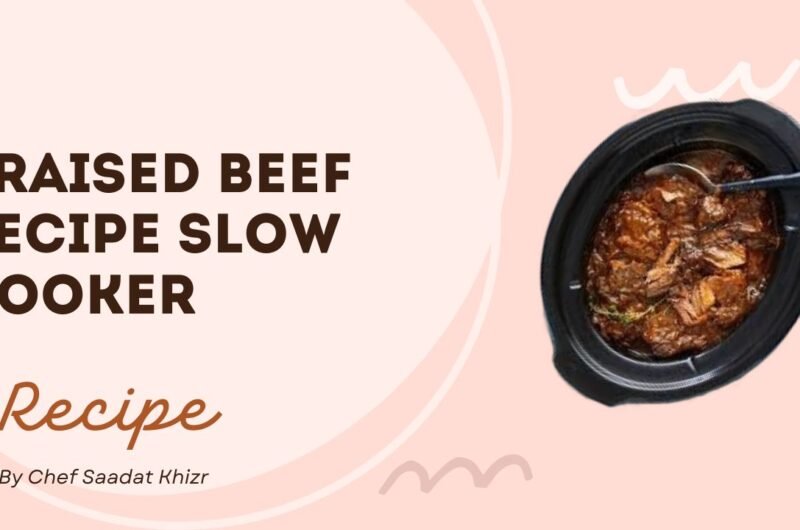
The “Effortless Luxury” Roast: Why Slow Cooker Braised Beef is the Ultimate Adulting Flex
Course: Main DishCuisine: Classic ComfortDifficulty: Medium6
servings20
minutes8
hours410
kcalServe it over some thick, buttery mashed potatoes or creamy polenta to catch every drop of that reduction. I
Ingredients
3 lbs Chuck Roast (Look for heavy marbling fat is flavor here)
2 tablespoons high-heat oil (Avocado or Grapeseed)
Salt and plenty of freshly cracked black pepper
1 large yellow onion (roughly chopped)
3 large carrots (cut into thick chunks)
4 cloves garlic (smashed)
2 tablespoons tomato paste (for that deep umami color)
1 cup dry red wine (Cabernet or Merlot—don’t use anything you wouldn’t drink)
2 cups high-quality beef bone broth
2 sprigs fresh rosemary
3 sprigs fresh thyme
2 bay leaves
Directions
- Pat the beef completely dry with paper towels. If it’s wet, it will steam instead of sear. Season aggressively with salt and pepper on all sides. Don’t be shy; it’s a big piece of meat.
- Heat your oil in a large skillet over medium-high heat until it’s shimmering. Sear the beef for 4–5 minutes per side. You want a dark, crusty, brown exterior. Transfer the meat to the slow cooker.
- In the same skillet, add your onions and carrots. Sauté for 3 minutes. Stir in the tomato paste and garlic, cooking for 1 minute until fragrant. Pour in the red wine and use a wooden spoon to scrape up all those little brown bits (the “fond”) from the bottom. This is where the soul of the sauce lives.
- Pour the onion/wine mixture over the beef in the slow cooker. Add the beef broth until it reaches the halfway point of the meat. Nestling the rosemary, thyme, and bay leaves into the liquid.
- Set the slow cooker to Low and walk away for 8 hours. Resist the urge to open the lid—every time you do, you lose 15 minutes of heat.
- Once the beef is fork-tender, remove it to a platter. Strain the liquid into a saucepan and simmer it on the stove for 10 minutes until it reduces into a glossy, thick gravy. Pour it back over the meat.
Recipe Video
The Science of the “Sear”
The most important part of this recipe happens before the meat even touches the slow cooker. You have to sear the beef.
When you sear meat over high heat, you trigger the Maillard reaction. This isn’t just “browning”; it’s a complex chemical reaction between amino acids and reducing sugars that creates hundreds of different flavor compounds.
The Technical Truth: In a slow cooker, the temperature never gets high enough to cause this reaction. If you don’t sear the meat in a pan first, you are leaving about 80% of the potential flavor on the table.
The “Less is More” Liquid Rule
Braising is defined as cooking meat in a small amount of liquid. If you submerge the meat completely, you are making soup. For a perfect braise, the liquid should only come about halfway up the side of the roast.
As the beef cooks, the collagen the tough connective tissue slowly breaks down into gelatin. This process follows a rough thermodynamic curve:
This is why we use “Low” for 8 hours instead of “High” for 4. You can’t rush physics. The gelatin is what gives the sauce that “lip-smacking” richness.
Final Thoughts
Braised beef is essentially a hug in a bowl. Serve it over some thick, buttery mashed potatoes or creamy polenta to catch every drop of that reduction. It’s also one of those rare dishes that actually tastes better the next day after the flavors have had a chance to mingle in the fridge.
You’ve officially transitioned from “making food” to “crafting a meal.” Enjoy the vibes!