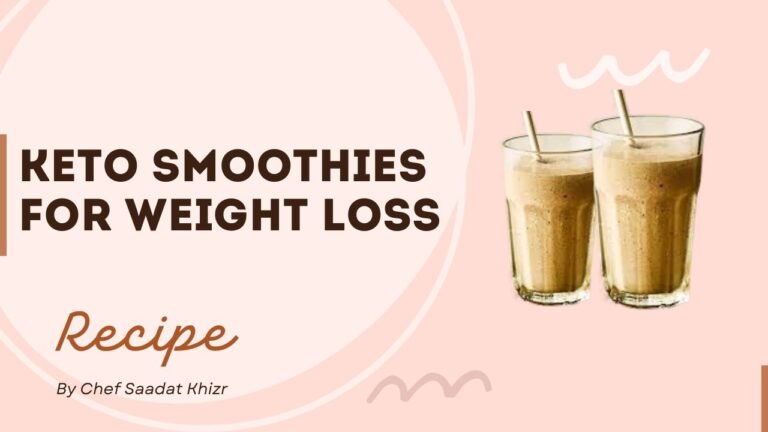
I’m going to be completely real with you: most “healthy” smoothies are actually just liquid candy masquerading as wellness.
I’m 22, and for a long time, I thought that if I put something in a blender with a couple of spinach leaves, it was automatically a “health queen” move. I’d load up on bananas, dates, mangoes, and a splash of orange juice, thinking I was doing my body a favor. Then, an hour later, I’d be “hangry,” shaky, and ready to eat my own arm. I was caught in the classic sugar-spike-and-crash cycle.
If you’re on a weight loss journey especially if you’re leaning into the Keto lifestyle you have to realize that the traditional smoothie formula is your biggest enemy. Keto is about shifting your body’s metabolism from burning glucose (sugar) to burning ketones (fat). You can’t do that if your “breakfast” contains 60 grams of sugar.
But here is the good news: a properly constructed Keto smoothie is a total vibe shift. It’s creamy, it’s decadent, and it’s specifically engineered to keep you full until 2:00 PM. It’s the “main character” move for anyone who wants to lose weight without feeling like they’re living on a diet of ice cubes and sadness.
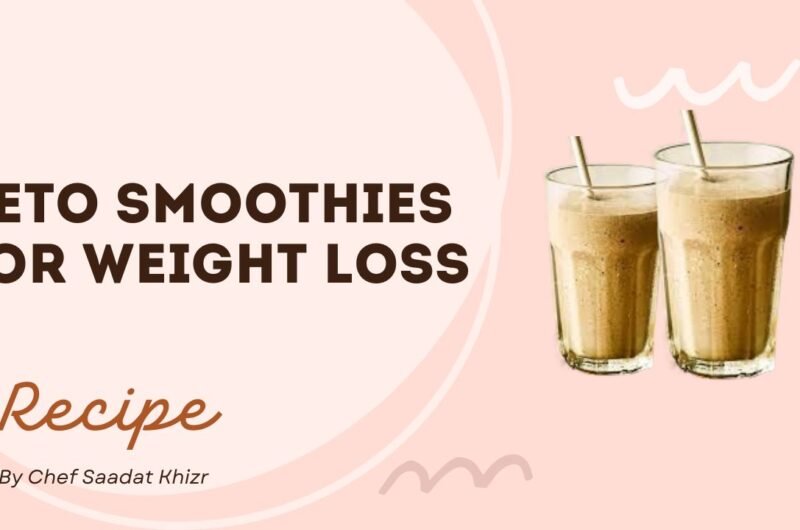
The “Liquid Gold” Shift: Why Keto Smoothies are the Ultimate Fat-Burning Flex
Course: BreakfastDifficulty: Easy4
servings5
minutes340
kcalKeep your jars in the fridge, prep your “smoothie packs” (avocado and spinach) in the freezer
Ingredients
1 1/2 cups unsweetened almond milk
1/2 medium avocado (frozen chunks are best for texture)
1/2 cup frozen spinach (more nutrient-dense than fresh!)
1 scoop (20g) Vanilla Collagen or Protein Powder (0g sugar)
1 tablespoon almond butter
1 tablespoon chia seeds
1/4 teaspoon cinnamon (helps with insulin sensitivity)
A pinch of sea salt (crucial for electrolytes on Keto)
3-4 drops of liquid monk fruit (optional)
Directions
- Always pour your almond milk into the blender first. This creates a “vortex” that pulls the solids down, preventing that annoying “protein powder clump” at the bottom of the jar.
- Add your frozen spinach and avocado.
Expert Guide Note: If you’re using fresh avocado, add a handful of ice cubes. A lukewarm Keto smoothie is a tragedy we want to avoid. The “chill factor” is what makes it feel like a milkshake instead of a salad. - Add your protein powder, chia seeds, and almond butter. If you’re using MCT oil for an extra metabolic boost, add it now.
- Start your blender on the lowest setting and gradually increase to high. Blend for at least 45–60 seconds. Because Keto smoothies have high fat and fiber, they need a little extra time to become truly “silky.”
- If it’s too thick, add a splash more almond milk. If it’s too thin, add more ice or a tablespoon of Greek yogurt (if your carb count allows it).
The Science of the “Satiety Stack”
Let’s have a quick, peer-to-peer reality check. On a standard diet, your body looks for carbs for energy. On Keto, we are looking for fats and fiber.
In a Keto smoothie, we use a specific formula to ensure you stay in ketosis while maximizing weight loss. We have to calculate our Net Carbs to make sure we don’t accidentally kick ourselves out of the fat-burning zone.
By keeping this number low (usually under 10g per smoothie), we keep insulin levels stable. Low insulin equals high fat-burning. It’s simple metabolic math.
The “Fruit Myth” Correction
I’m going to be direct with you because I care: You cannot put a banana in a Keto smoothie.
I know, I know—bananas are the “backbone” of the smoothie world. But a single medium banana has about 27g of carbs. That’s an entire day’s worth of Keto carbs in one go. To stay in the “weight loss lane,” we swap high-sugar fruits for high-fat fruits (like avocado) or low-glycemic berries (like raspberries or blackberries).
The Helpful Peer Tip: If you miss the creamy texture of a banana, frozen cauliflower rice is the secret “cheat code.” I promise you won’t taste it, but it makes the smoothie thick, frosty, and adds a massive fiber boost without the sugar.
The Anatomy of a Keto Power Smoothie
To make this work for weight loss, every ingredient needs to have a job. We aren’t just blending things for the aesthetic; we’re building a fuel cell.
- The Base: Unsweetened almond or coconut milk (Avoid “Oat Milk” it’s surprisingly high in carbs!).
- The Fat: Avocado, MCT oil, or almond butter. This is what tells your brain, “I’m full, stop looking for snacks.”
- The Protein: A high-quality, low-carb collagen or whey isolate.
- The Fiber: Chia seeds, flax seeds, or the aforementioned frozen cauliflower.
- The Sweetener: Stevia, Monk Fruit, or Erythritol (only if you need it).
Why This Works for Weight Loss
The magic of this smoothie isn’t that it has “negative calories” (that’s not a thing, don’t let anyone tell you otherwise). It works because of Satiety Signaling.
When you consume healthy fats like avocado and almond butter, your body releases cholecystokinin (CCK) and GLP-1—hormones that tell your brain you are satisfied. Standard fruit smoothies spike your ghrelin (the hunger hormone) shortly after drinking them. This Keto version shuts ghrelin down.
You aren’t just “eating less”; you’re “wanting less.” That is the secret to sustainable weight loss in 2026.
Final Thoughts on the Keto Flex
Making a Keto smoothie is a statement. It says you’re over the “sugar high” and you’re ready for steady, focused energy. It’s practical, it’s fast, and it actually tastes like a treat.
Keep your jars in the fridge, prep your “smoothie packs” (avocado and spinach) in the freezer on Sundays, and you’ll never have an excuse to hit the drive-thru for a sugary muffin again. You’ve got the science, you’ve got the formula now go get those results.